
When the characters of Sherlock step away from 221B Baker Street, they aren’t always to be seen against a London backdrop. I wanted to recreate some of the scenes inside other buildings too.
One of the most popular scenes from A Scandal in Belgravia is Sherlock and John’s meeting with Mycroft and a royal equerry at Buckingham Palace. Sherlock is not wearing any clothes under his sheet, much to John’s amusement.
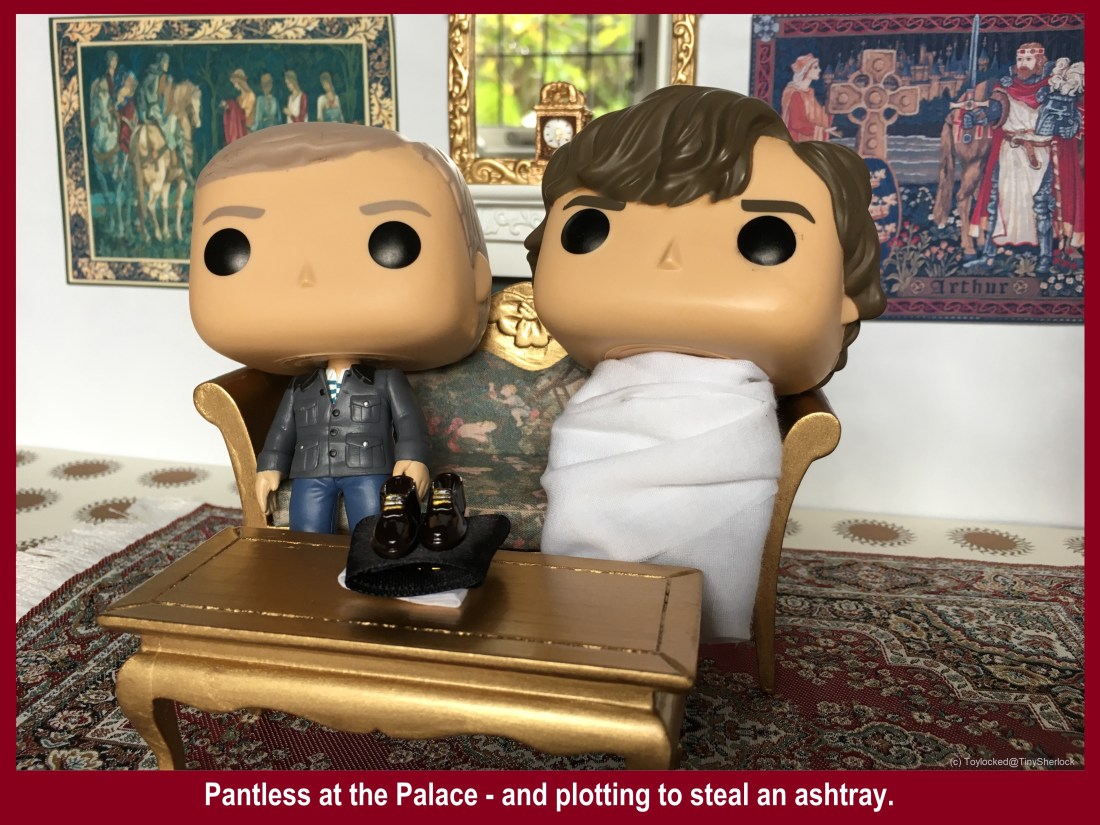
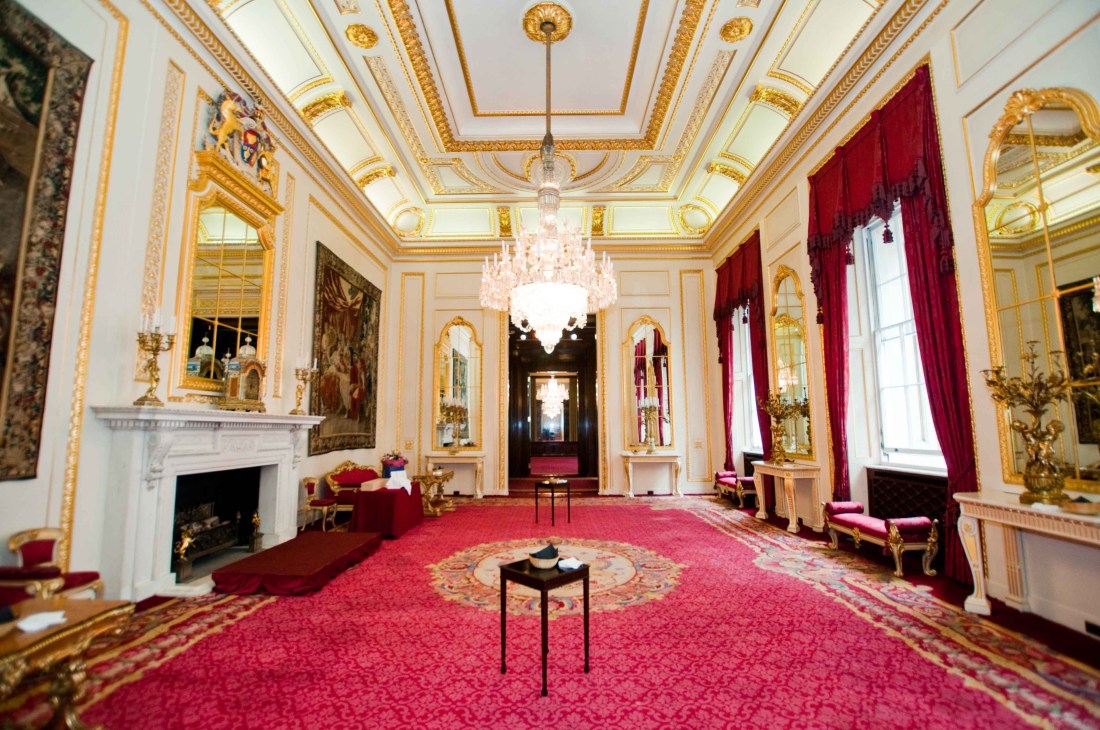
This scene is filmed in Goldsmiths’ Hall in the City of London, so I found photographs of the interior to check my recreation of the scene.
I bought a very smart sofa and coffee table, the mirror, clock and tapestries, and the tiny shoes online. Sherlock’s clothes are small pieces of folded fabric, while the sheet around Sherlock is cut from a plain cotton handkerchief.
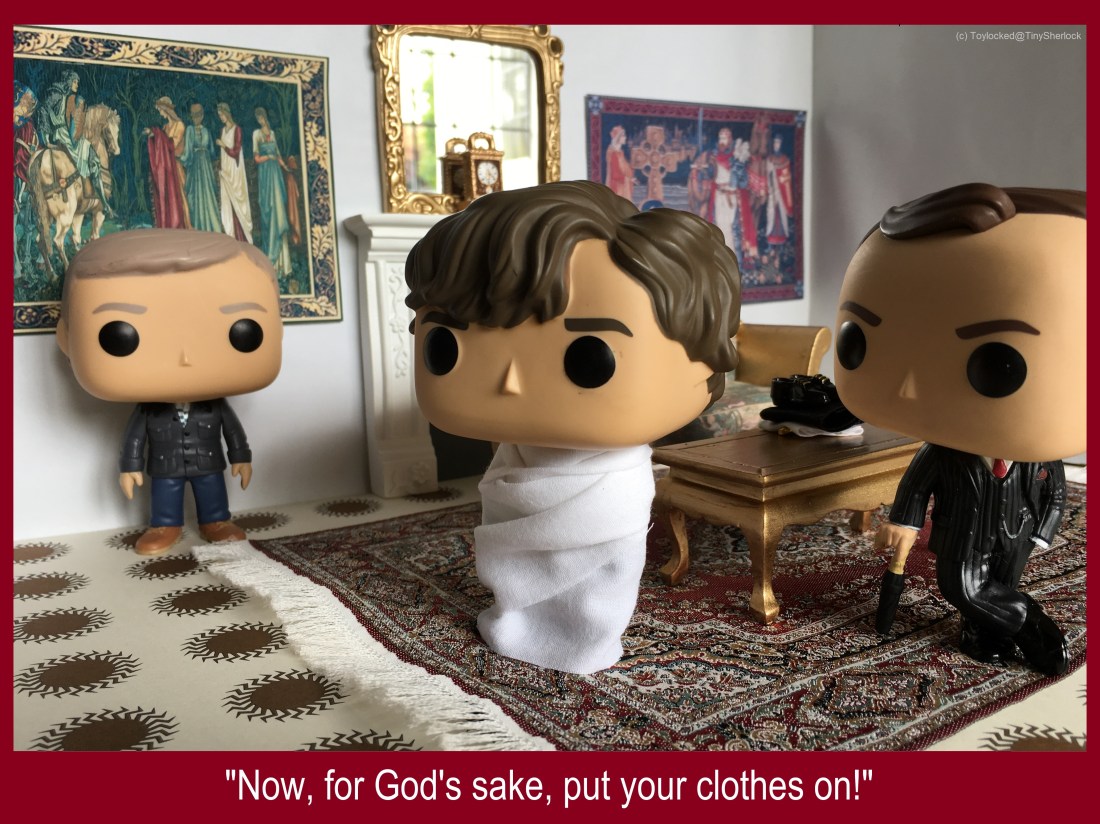
Using mirrors in these pictures is tricky, because of the risk of including a reflection of me or the camera or parts of my house. For these two pictures, I positioned the scene to show the reflection of my garden through the dining room window. It was not possible to show the classic moment when Sherlock’s sheet unravels – this Tiny Sherlock still has his clothes on underneath!
In The Reichenbach Fall, John is taken to the Diogenes Club by Mycroft’s mysterious staff. Unaware of the club’s rule of silence, he causes a disruption; he is led away by two members of staff and taken to a side room which appears to be available for private conversations – and is almost an extra office for Mycroft. Here John does actually meet Mycroft, who wants to warn him about the assassins setting themselves up around the Baker Street flat.
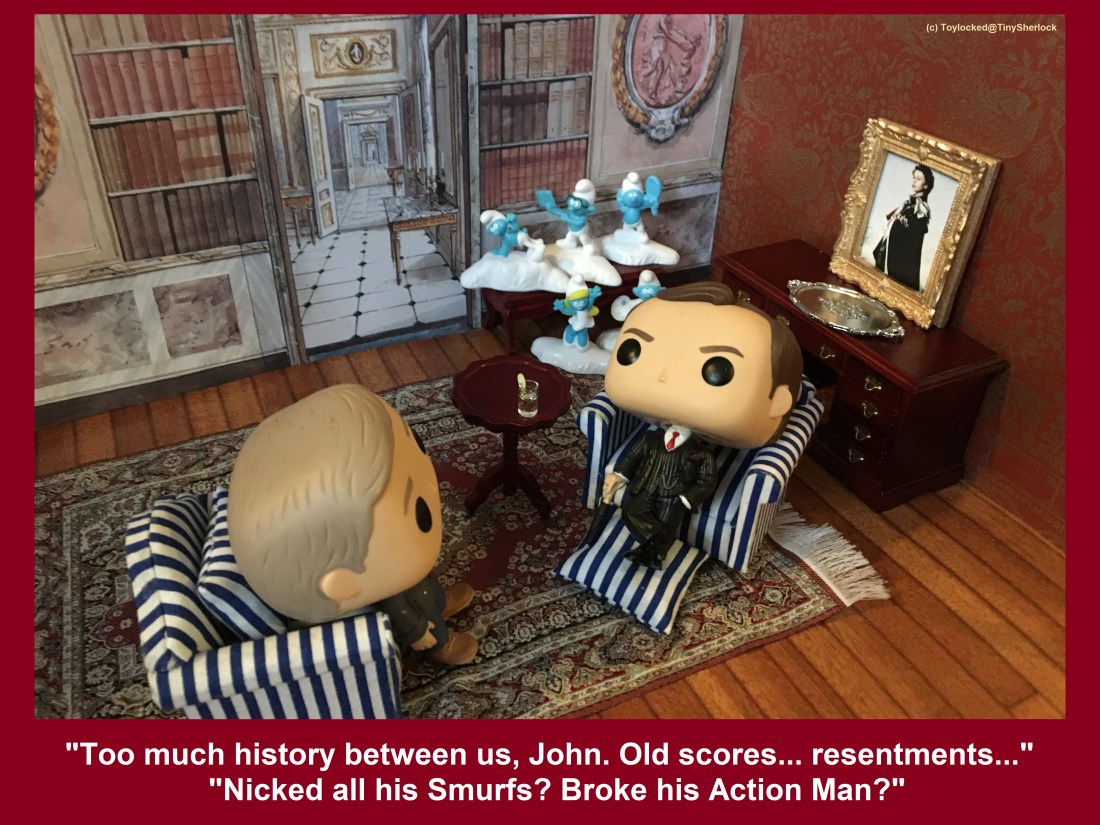
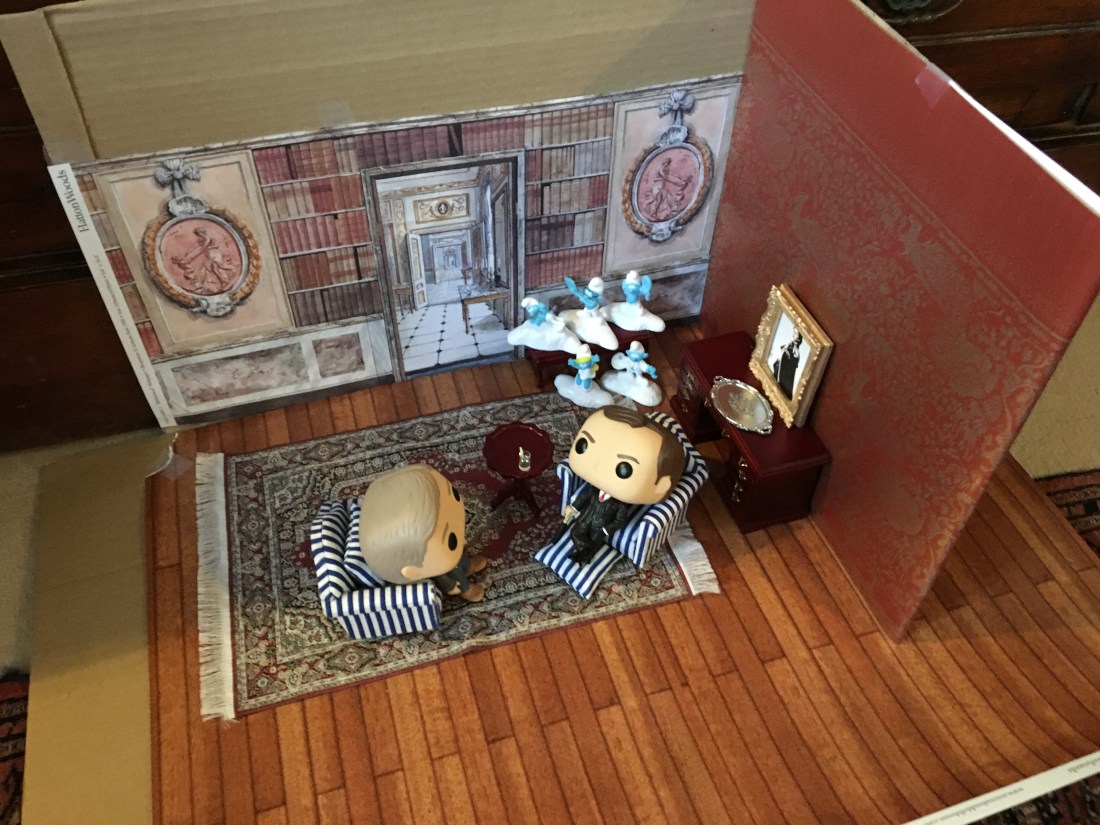
I had been wanting to recreate this scene for some time, but when I discovered on the website of a dollshouse supplier (the excellent minimumworld.com) the paper which covers the back wall, I knew I could do it. It is a single sheet, printed with the doorway, the rooms beyond, the bookcases and the wall decorations. I had owned the chairs for some time, but hadn’t used them in the current incarnation of Toylocked, so they were perfect, being so much smarter than the ones I use for 221B. The other props had largely been used elsewhere, apart from the beautiful silver tray. And of course, there are the Smurfs – which I bought on eBay in a job lot for about £2!
Scenes like this look best when two walls are visible, and I have created a number of rooms using the sides of cardboard boxes. At the risk of destroying the illusion, this is what the set-up actually looks like:
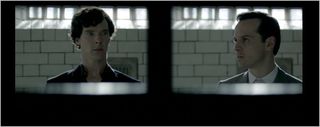
Police cells appear more than once in Sherlock. In The Reichenbach Fall, Moriarty and Sherlock are both put in the cells following Sherlock’s failure to respect the authority of the court. There follows a beautifully framed scene where we look through the windows in the cell doors to see the two of them turning in their cells, separated by a wall:
I bought a template from Etsy to print the old-fashioned tiles, I created some tiny gratings (printed at a very small scale, and stuck onto the walls with folded edges to give a little depth) and cut two holes in a piece of black card to frame the heads.
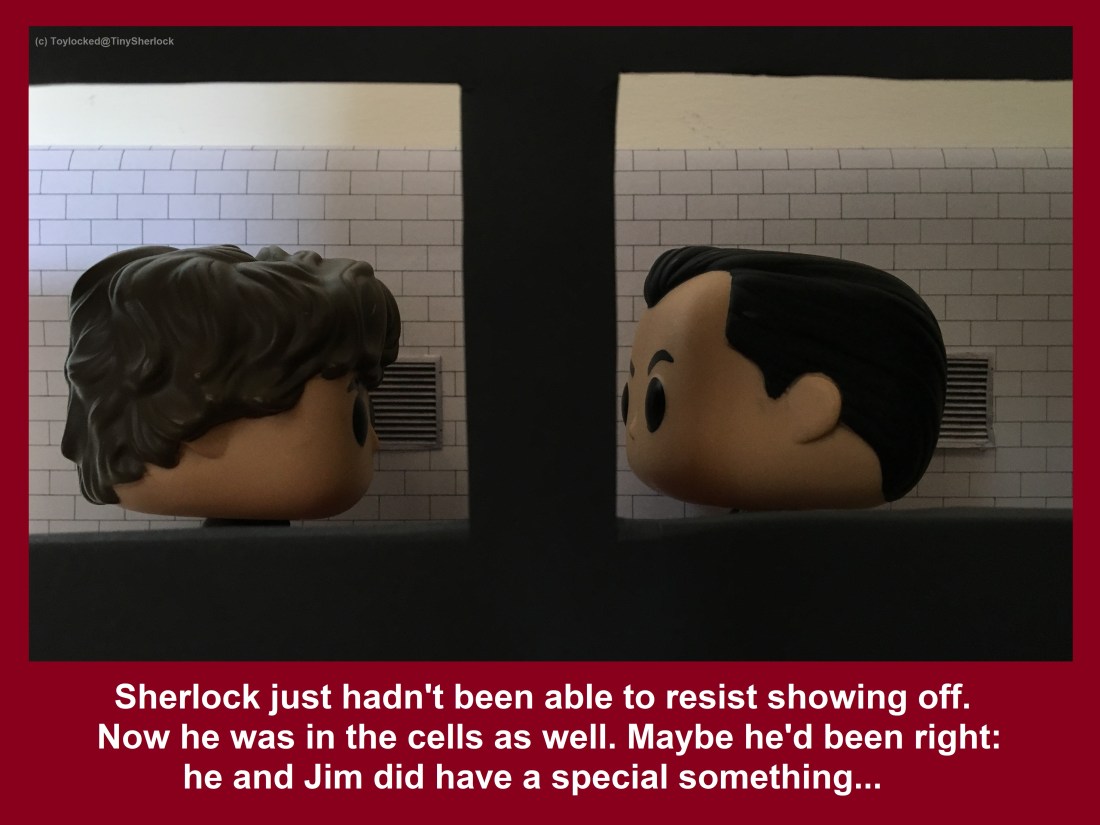
This was one of those occasions when the simplest ideas are the hardest to carry out: getting the positioning, the lighting and the focus right was nigh on impossible and the picture is not as clear as I had hoped, but I try to tell myself I have achieved a dark, moody ambience!
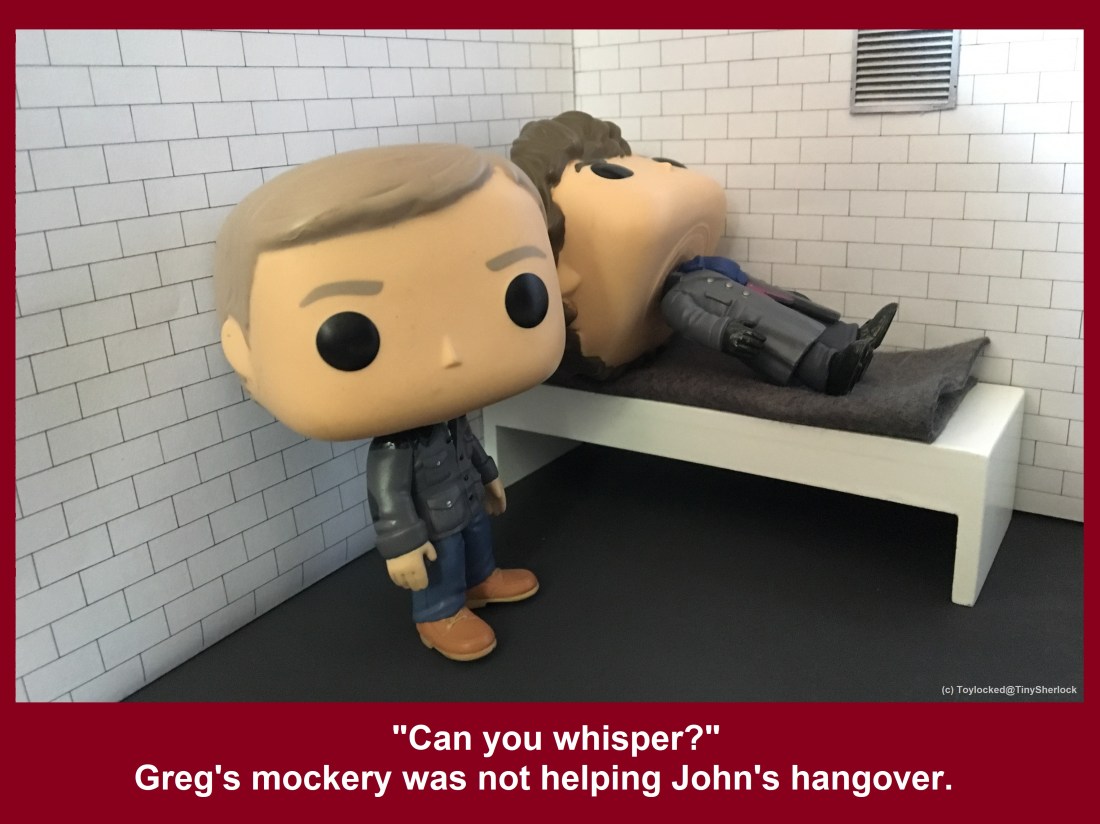
I used the same set-up to picture Sherlock and John waking up in a police cell following John’s rather hopeless stag night. A simple table and some folded felt created the bed. The back wall wasn’t very stable and as you can see I propped it up with an old Tardis money-box which happened to be handy (Toylocked’s house is full of such useful things!).

This was another very simple picture, but it received positive feedback – mainly because it is such a funny scene anyway!
One of the most intriguing locations in Sherlock is Mycroft’s extraordinary house. To recreate the scene at the beginning of The Final Problem, where Sherlock arrives to gloat over a Mycroft who has just been scared out of his wits, I was able to use a wonderful piece of work by some artists who live quite nearby. The enormously talented Brian and Lizzie Sanders created a beautiful book over 20 years ago, called A Three-Dimensional Edwardian Doll House.

This extraordinary book opens right out, so that when the covers are tied back to back with the ribbons provided, one has a two-storey, eight-roomed house, as shown in the photos above. I bought my copy on eBay some years before I started creating Toylocked, having admired Brian’s other work (including the wonderful book Evacuee, about spending part of his childhood in my home town). If you don’t know Brian and Lizzie’s work, it’s worth looking out for: Brian illustrated many many book covers and UK postage stamps, and co-produced an amazing book about the Titanic, with a huge fold-out model of the ship inside; Lizzie, amongst other work, illustrated the Yorkshire Tea packet familiar to UK readers. You can find out more about Brian’s work here: http://artofbriansanders.blogspot.com/
I realised that in this book I had a ready-made setting for Mycroft’s house in which Sherlock could stand at the top of the stairs and Mycroft in the hall downstairs. It even has opening doors. A small doll and a rather scary porcelain clown were purchased on eBay and I had my scene!
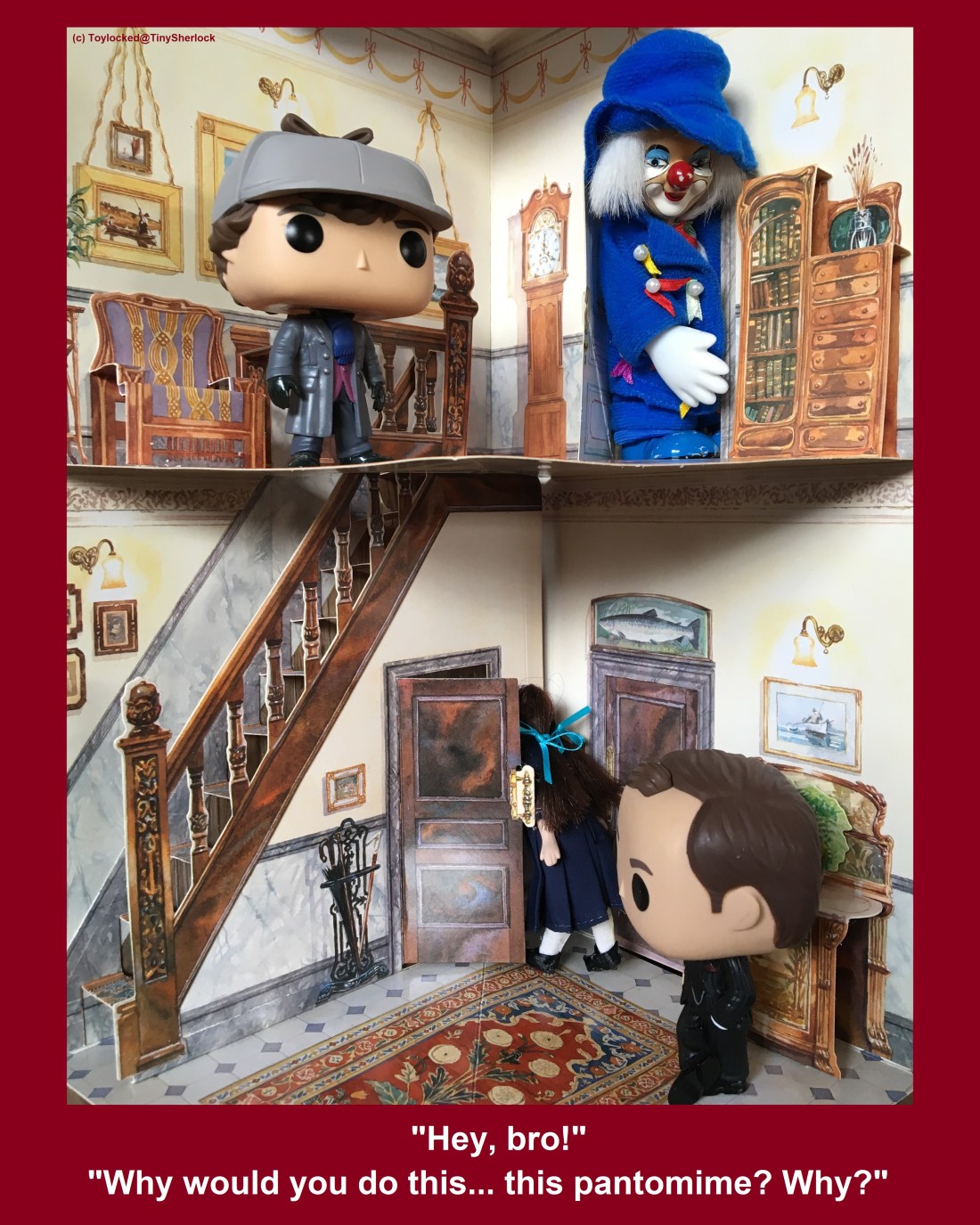
(Huge thanks to Brian for permission to use this work in the furtherance of Tiny Sherlock fun!)
 Toylocked